
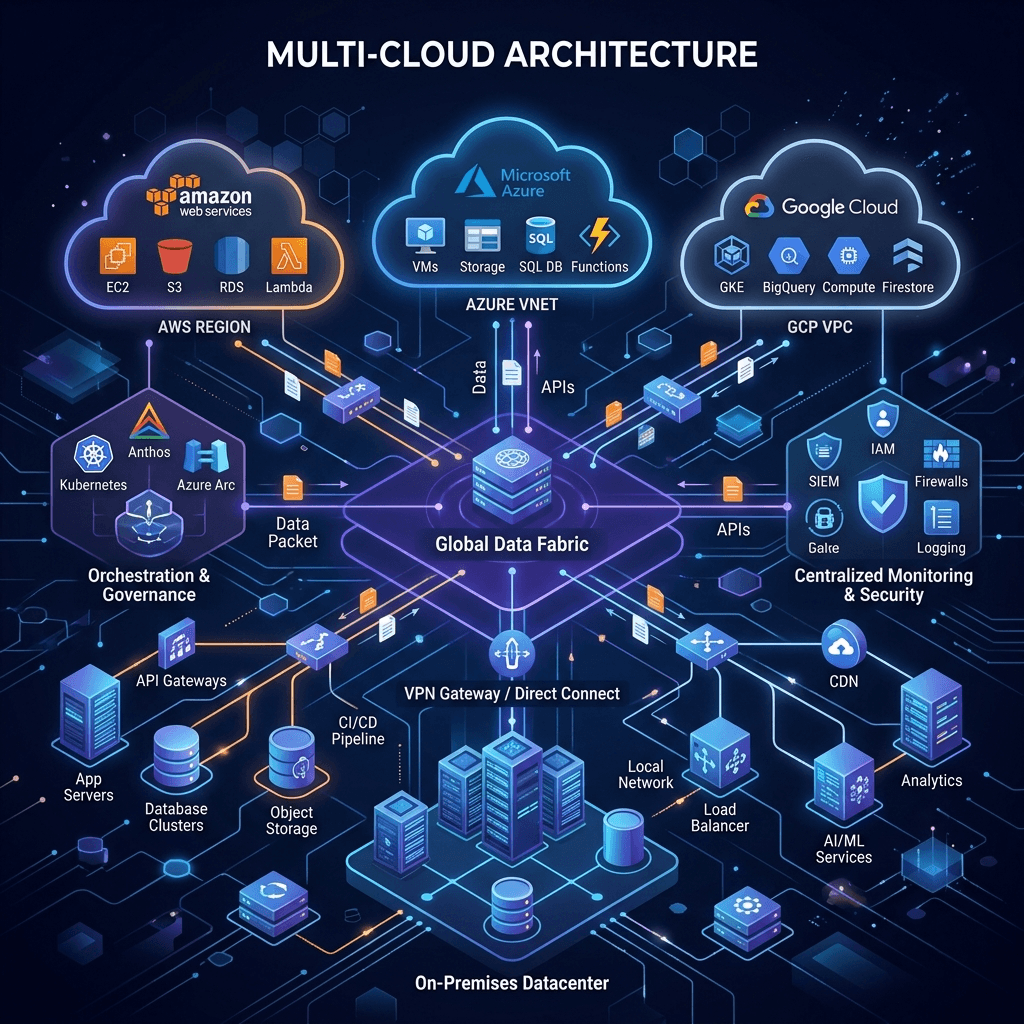
Multi-Cloud Systems
One architecture across every Salesforce cloud
We design and implement cross-cloud Salesforce solutions that span Sales Cloud, Service Cloud, Commerce, Marketing Cloud, and Field Service — with unified data models and seamless handoffs between teams.
What We Do
- Multi-cloud architecture design and roadmap development
- Sales Cloud + Service Cloud unified case and opportunity management
- Commerce Cloud + Marketing Cloud personalized customer journeys
- Field Service Lightning integrated with Service and Sales Clouds
- Salesforce CDP / Data Cloud spanning all clouds
- Cross-cloud data model design, object relationships, and reporting
Why It Matters
When Sales, Service, and Commerce teams work from disconnected systems, customers feel it. A unified multi-cloud architecture means a sales rep can see a customer's open support tickets, a service agent can see renewal dates, and your marketing team can suppress known churners from acquisition campaigns — automatically.
Summit
Salesforce partner tier
5+
Salesforce clouds we specialize in
200+
Salesforce Certifications spanning all clouds
350+
Cross-cloud projects delivered
Our Approach
Current state mapping
Document every cloud in use, data model gaps, and cross-team handoff pain points.
Unified architecture design
Design a shared data model, object strategy, and integration layer across clouds.
Phased implementation
Implement in phases to minimize disruption while delivering value incrementally.
Cross-cloud testing
Test end-to-end scenarios that span multiple clouds and teams.
Change management
Enable all teams on the new workflows and cross-cloud visibility.
Summit
Salesforce Partner tier — the highest level
10+
Years of focused Salesforce expertise
200+
Active Salesforce certifications on our team
Frequently Asked Questions
What does a multi-cloud Salesforce implementation look like?
We connect two or more Salesforce Clouds — Sales, Service, Commerce, Marketing — into a unified platform with a shared data model, cross-cloud automations, and unified reporting.
Can Sales Cloud and Service Cloud share the same customer record?
Yes. Sales reps see service history; agents see deal stages — no custom integration required. This unified view is one of the primary benefits of multi-cloud.
How do you manage the complexity of a multi-cloud rollout?
We use a phased approach: establish the core data model first, then roll out each Cloud to the relevant teams. This reduces risk and keeps go-lives manageable.
Is Marketing Cloud part of the Salesforce platform or separate?
Marketing Cloud has its own infrastructure. Connecting it to Sales or Service Cloud requires Marketing Cloud Connect — a native integration we configure as part of multi-cloud projects.
How many Salesforce Clouds can realistically be implemented at once?
We recommend starting with two Clouds and expanding. Implementing three or more simultaneously significantly increases risk — our phased approach builds toward a unified platform safely.
Ready to get started?
Let's talk about your multi-cloud systems needs.